For Greg Bruner, the automobile business is much more than a profession; it’s a calling shaped by family, community values and a deep belief in servant leadership. His career is the story of a family dealership’s progression and of an industry navigating rapid change while remaining rooted in relationships and trust.
Shaped by Family and Community
Greg grew up immersed in the car business and witnessed firsthand the dedication required to build, grow and sustain a successful dealership in a close‑knit community.
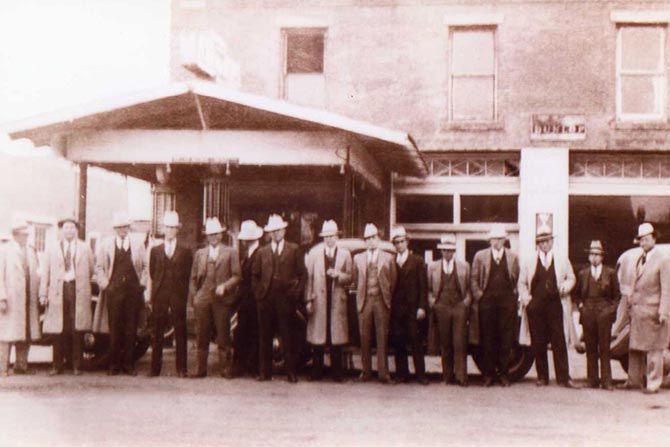
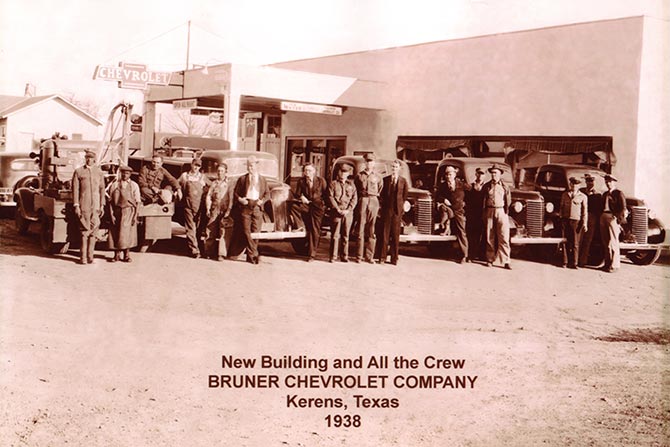
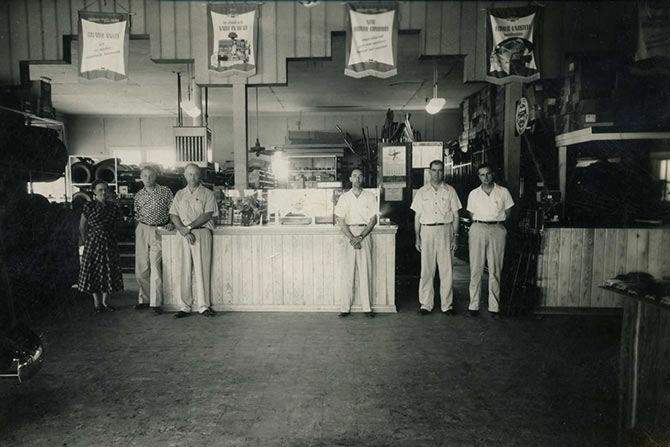
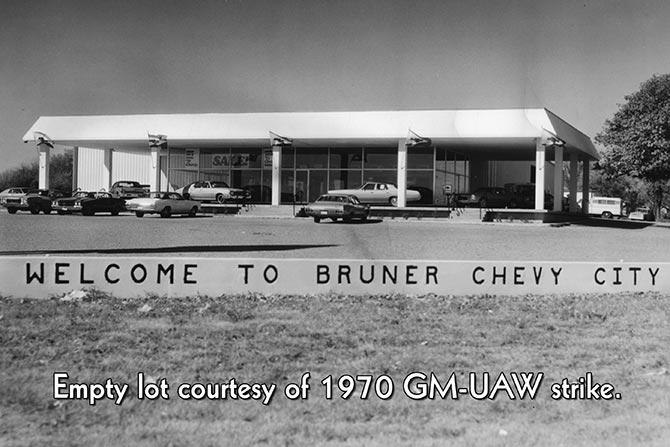
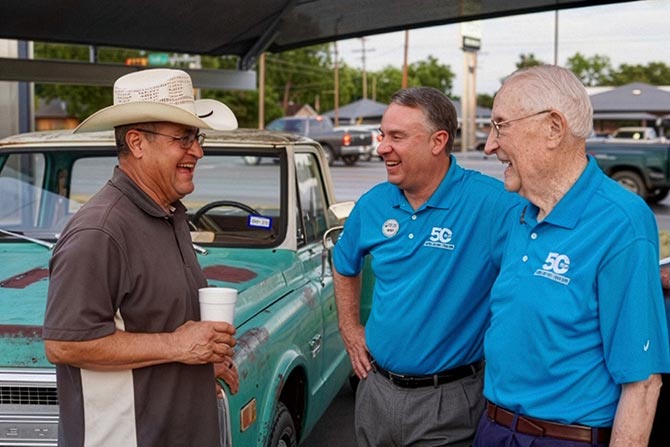
The Bruner family entered the automotive industry in the early 1920s in Kerens, Texas, beginning with an auto service station run by Greg’s great‑grandfather, Charlie, and then his grandfather, Vernon. Vernon first sold Star automobiles before becoming a Chevrolet dealer in 1928, and the legacy of Bruner Chevrolet eventually passed to Greg’s father, Dwain.
For young Greg, watching his family interact with customers, employees and neighbors was a lesson in the importance of reputation and character.
Following the Family Path — By Choice
Greg didn’t march into the showroom with a predetermined plan. In college, he first pursued accounting, drawn by mentors and the idea of becoming a CPA, before realizing the profession wasn’t as good a fit as he’d imagined.
Around his junior year, as he and his girlfriend Lynda were planning to marry, he told his father he wanted to return home and work at the dealership. His dad chuckled, “You just need a job because you’re fixing to get married,” to which Greg responded, “Well, you’re not wrong.”
Greg got the job he’d asked for, and once there, he learned every corner of the business. A four‑month stint selling cars turned into an unexpected promotion to F&I when the department manager resigned. Greg had learned just enough from helping out at the dealership during the summers while in college to print contracts, so he stepped in to fill the gap. He later became sales manager when the prior manager left to establish his own store. “Every one of my promotions was from attrition,” Greg jokes.
Learning the ropes of the family business wasn’t always easy. As a teen washing cars, he accidentally left a manual-transmission vehicle in gear, started it to listen to the radio like the older guys, and sent the car lurching forward. It was his “first wreck,” and as bad news often does, it reached his dad with impossible speed. The crew had a field day ribbing “Little Bruner” for wrecking a car.
Mentors Who Made a Difference
Greg credits family and industry mentors for shaping his approach. He speaks warmly of Jack, a seasoned used‑car manager who taught him how to appraise vehicles, understand used‑car markets and navigate the wholesale network. “I just learned so much from him,” Greg says, “so I think about Jack a lot, even though he passed many years ago.”
He also remembers neighboring Chevrolet dealers who, despite Greg being in his early 20s, never treated him like a kid. Those relationships modeled a rare mix of rigor and generosity that still guides him today.

The Most Rewarding Part of the Journey
Reflecting on his automotive career, Greg says the relationships he’s built with customers have been the biggest reward. He lights up when talking about serving customers “where they are in life,” sharing a recent example of helping a widow with paperwork after her husband’s unexpected passing. He measures success not only in units sold but in lives impacted — employees who build careers and customers who return across generations.
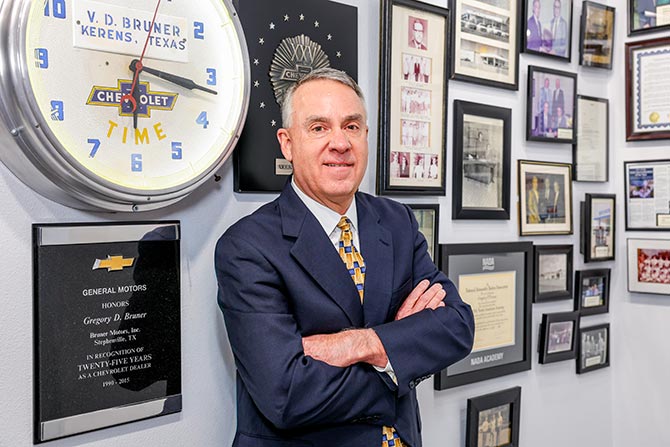
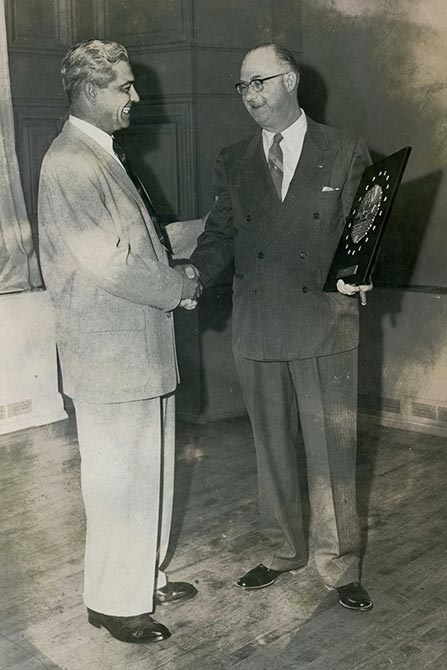
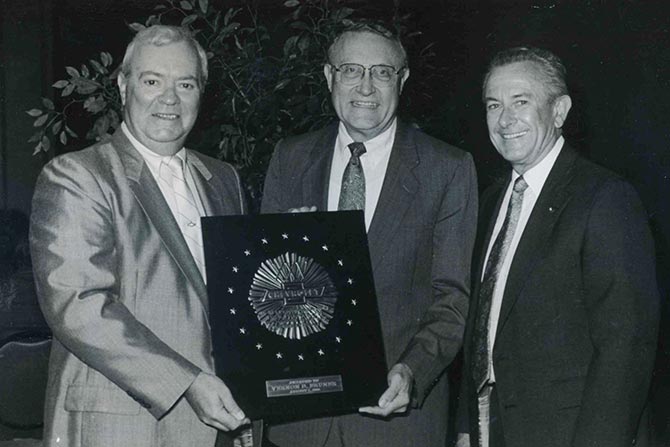
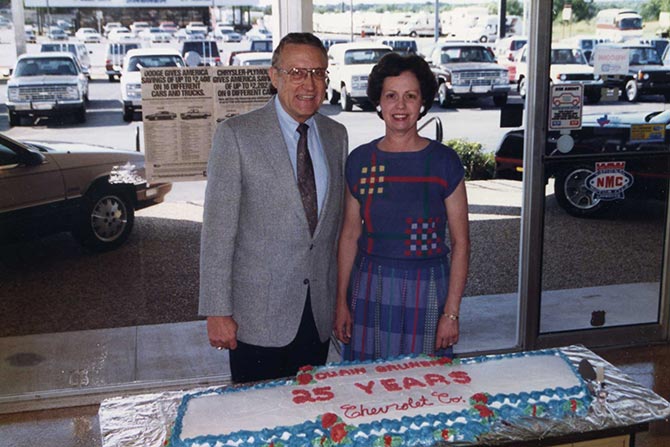
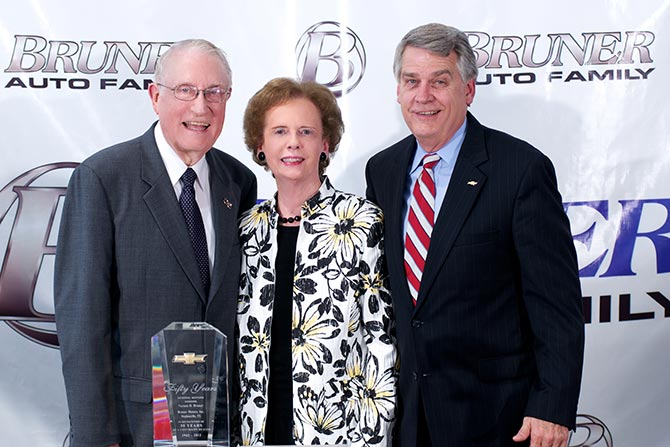
Another deeply personal milestone was receiving his own 25‑year Chevrolet service plaque and placing it beside his father’s and grandfather’s. Three generations, united through the same industry and values. “It was surreal,” he says, “and a real rewarding moment for me.”
Navigating an Industry in Transition
Every era brings its own headwinds and opportunities. Greg remembers his father calmly announcing after 9/11 that he was going to the bank so the dealership could make its payroll. That jolt of reality taught him how quickly conditions can shift and how resilient dealers must be.
Today’s challenges range from the practical to the geopolitical. Greg mentions reckoning with the role of AI in retail and service, the pace and practicality of the EV transition and the potential pricing pressure from Chinese automakers in the global market. These issues intersect with policy debates and evolving consumer expectations.
Closer to the showroom floor, Greg points to brand dynamics. As a Stellantis dealer, he has weathered a difficult period, but left the recent NADA Show encouraged by new leadership and new plans. He trusts in the resilience of the franchise model, fortified by local ownership, dedicated management and teams who care about their customers. “There’s always another hurdle,” Greg says, “but history is a good teacher.”
Stepping Into the Chairman Role
Greg’s decision to serve as chair of the Texas Automobile Dealers Association stems from gratitude and a commitment to continuity. His family has been engaged with TADA for decades, and he grew up seeing how advocacy, education and networking strengthened dealers and communities.
He’s quick to say he’s “not a politician,” and that his leadership style is that of a peacemaker and consensus builder. He cites his many long‑standing relationships with manufacturing partners as invaluable experience, helping him learn how to find common ground with others
Goals and a Call to Action
Greg frames his goals around advocacy, unity and education, and he is clear about how each can be put into practice. He wants directors to engage locally by visiting stores in their district to chat with dealers, share coffee, compare notes and strengthen the relationships that help the association function at its best.
He also encourages members to reach out to state representatives and senators this non‑legislative year — invite them to their dealership to learn about their operation and build familiarity well ahead of the 2027 session. Relationships at home make all the difference when legislation comes into play.
Balancing Work, Faith and Family
Balance, he says, is a team effort — at the store, at the association and at home. Delegation and trust empower strong managers. Collaboration with board members spreads the load. Stepping away to be present with family keeps the entire enterprise grounded.
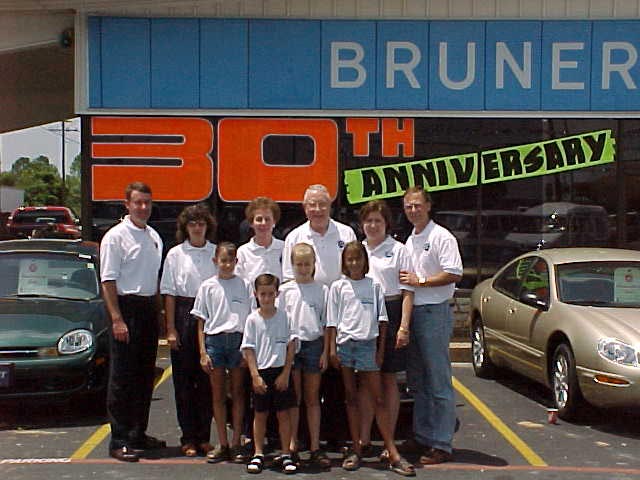
Outside the office, Greg loves spending time outdoors and with his family, including his wife of 42 years, Lynda; daughter Courtney and husband Jeremy, along with their children Jett and Karis; son Kyle and wife Sarah, and their son Will.
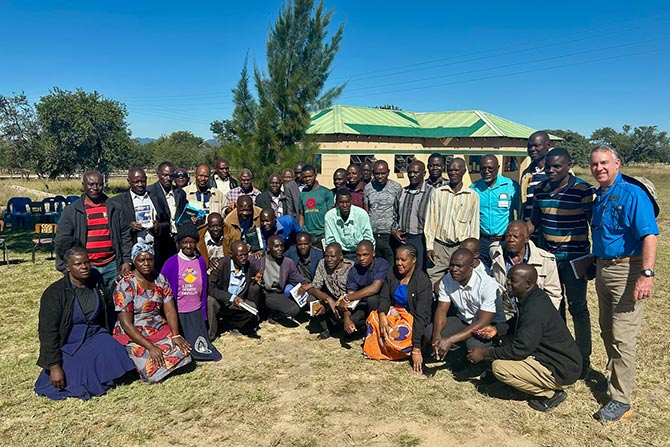
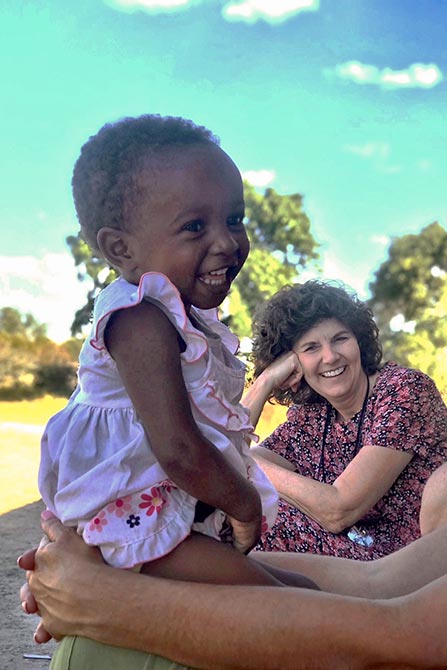
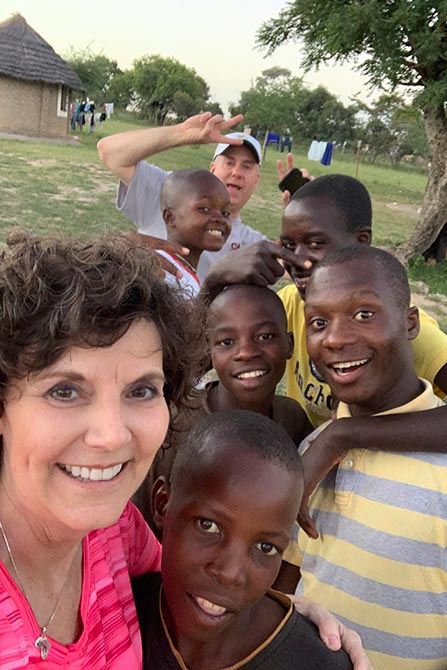
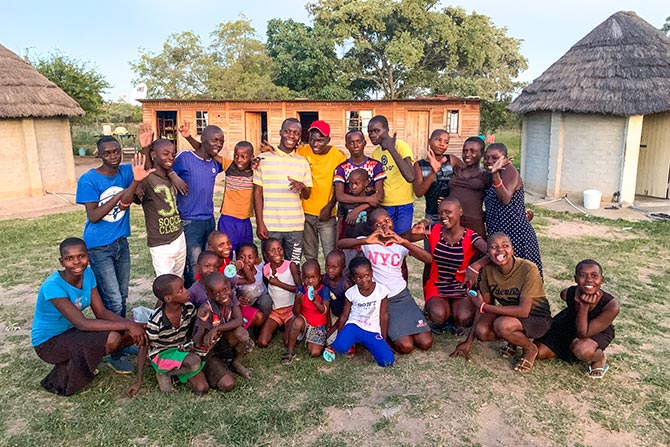
Faith is foundational to Greg; he serves as a deacon at his church, and he and his wife have taught fourth‑grade Sunday school for more than two decades. In recent years, they have traveled to Zimbabwe several times to support the work of the Mberengwa Caring Center, an initiative of In Sight Ministries, where Lynda serves on the board.
The Caring Center educates and provides for youth in need, and Greg cherishes the opportunities he’s had to interact with the students there, including introducing them to American baseball. He emphasizes how his experiences in Zimbabwe have shaped his perspective on what truly matters in life. “Boy,” Greg says of the students, “they bless you back so many times.”
Final Reflections
If Greg could sum up his philosophy in one line, it would be the Golden Rule: treat people the way you want to be treated. In his view, that simple standard would reduce division, build common ground and improve the lives of the next generation.
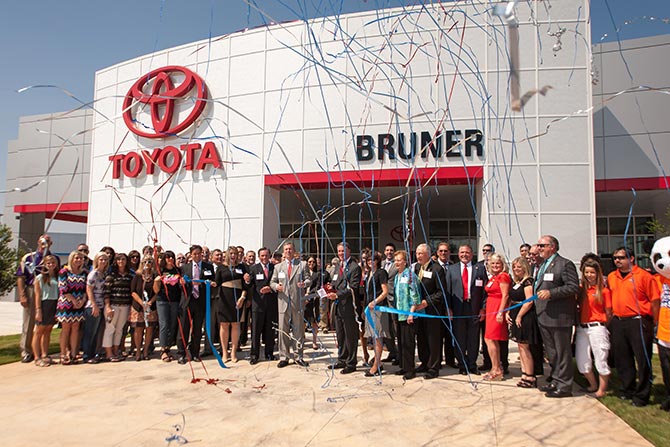
As president of Bruner Auto Family dealership group, representing General Motors, Stellantis and Toyota brands, and now as chairman of TADA, he sees a future that is complex but bright, as long as leaders pair adaptation with core values and never lose sight of the people they serve. In an industry defined by movement, his leadership is firmly grounded in the belief that the best businesses serve something greater than themselves.