


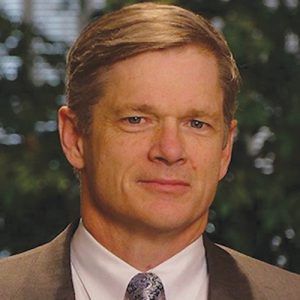


I heard a story recently that I think perfectly captures some of the challenges we face in politics today. At the federal level, the pace of change in leadership has been remarkable. Members of the U.S. House run for election every two years, Senators every six, and the President every four. Since 2005, at least one of these three branches has shifted leadership in 10 of the last 11 election cycles.
During that same time, each President — Republican or Democrat — has only enjoyed unified party control in Congress during their first two years in office. Once the midterms hit, that alignment has consistently flipped, forcing every administration to navigate a divided government and political gridlock. The speaker who shared this story referred to our current era as the “Age of Discontent” and noted that this turbulence isn’t just an American phenomenon — it’s also evident in nearly every developed nation around the world.
Here in Texas, the picture has looked quite different on the surface. Since 2005, all statewide elected officials have been Republican, and both chambers of the Texas Legislature have remained under Republican leadership. Our state government has provided a level of political stability that stands in contrast to the national scene.
That said, Texas has undergone tremendous change beneath that steady surface. The Legislature still operates on a two-year cycle, meeting in odd-numbered years with elections in even years — but turnover has been significant. Today, only 3 of 31 Senators and 15 of 150 House members were serving back in 2005. At the same time, our population has grown from 23 million to more than 32 million residents. That kind of growth brings both opportunity and complexity, especially when it comes to ensuring policymakers understand the industries that drive our economy and support our communities.
In my previous message, I encouraged each of you to take time to get to know your local elected officials — invite them to your dealerships, show them the work you do every day, and demonstrate firsthand the value you bring to your customers and your communities. That engagement is vital, especially now as we prepare for the next legislative session.
One key focus area for the next session will be our continued efforts to ensure manufacturers fairly reimburse dealers for parts used in warranty and recall repairs. Under Texas law, the manufacturer is required to pay the franchised dealer for warranty work, just as a non-warranty customer would pay. Texas has a clear formula for labor, but not for parts. The lack of a parts formula has resulted in several manufacturers underpaying Texas dealers. And when that happens, it doesn’t just hurt the dealer, but trickles down to the technicians repairing the vehicles and ultimately the customer who waits longer for repairs.
Below is a video featuring our 2025 TADA chairman, Tim Crenwelge, discussing the real-world impact of payments falling short — on employees, customers and operations alike. TADA is planning to share several future videos with you that reinforce the need for a fair payment system for parts.
I would encourage you to take a moment to watch the video. If you are interested in filming your own video, please let us know. We would love to work with you.
The interim period between sessions is an ideal time to build relationships and educate legislators, as they have more time to listen and learn. Most lawmakers have never had the opportunity to fully appreciate the complexities of the franchise system — and that’s where your voice and experience make all the difference.
Our future success depends on ensuring legislators understand how the current franchise model benefits their constituents, supports local jobs, and keeps Texas consumers moving safely and efficiently. This is only one step in a long process, but every conversation matters. By staying engaged now, we’ll be better positioned for the 90th Regular Session in 2027 — and beyond.
Thank you, as always, for your leadership, your advocacy and your commitment to strengthening the Texas dealer community.